
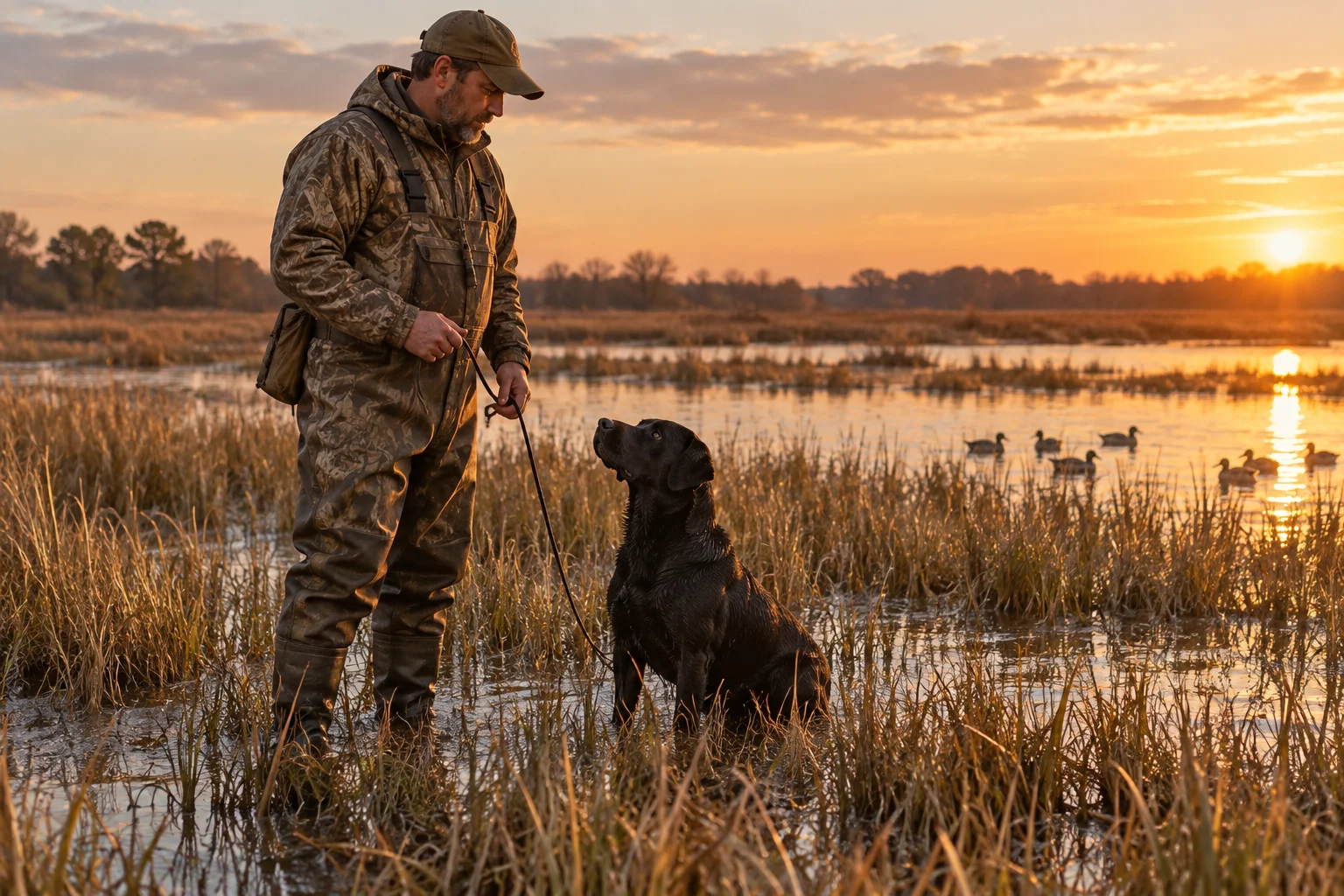
Before you hand over a deposit, run the dog through a six-station field test covering obedience, gunfire, retrieving, bird contact, steadiness, and water work. That is the short answer to how to test a started gun dog before you pay: verify each skill in person, in the field, the same standard Berry Creek Labs applies through its own Training program.
By Berry Creek Labs, Champion Labrador Breeders
A started gun dog has already had months of foundational work, but "started" means different things to different sellers. The only way to know what you are actually buying is a live evaluation, not a video clip or a pedigree sheet. Plan to spend thirty to forty-five minutes in the field working through the six stations below.
Run the evaluation yourself, or watch closely while the seller runs it and call out the cues. A started gun dog should respond to a handler it just met; a dog that only performs for its trainer is not fully started. Reputable sellers welcome this kind of test, and a seller who resists an in-person evaluation before you pay is the first red flag.
What Exactly Counts As a Started Gun Dog?
"Started" is a working description, not a certification, and definitions vary by trainer. In general, a started gun dog is a young adult, usually eight months to two years old, that knows basic obedience, has been introduced to gunfire without flinching, retrieves to hand on land, and has had some exposure to birds, whether pigeons, pen-raised quail, or early duck work. A started dog is not necessarily steady to wing and shot, and it may not have handled a full hunt yet.
That is a different purchase than an untrained puppy, at a different price. If you are choosing between a puppy and a started dog, the field test below tells you whether the extra cost bought you anything.
The Six-Station Field Evaluation
Run these six stations in order, in an open field or a low-pressure hunting setup rather than a kennel run. Each one isolates a different skill so a weakness in one area cannot hide behind strength in another.
What Obedience Commands Should a Started Gun Dog Already Know?
Confirm the basics before testing anything else: sit, stay, come, heel, and a stop whistle or hand signal to halt the dog at a distance. A started gun dog should hold a sit-stay for at least thirty seconds with light distraction, come promptly off a long check cord, and take a stop signal from twenty or more yards away. Gaps here usually mean the seller spent more time on birds than on foundation obedience; a dog that needs repeated commands or physical correction to comply is unfinished work.
How Do You Test a Started Gun Dog's Reaction to Gunfire?
Have someone fire a blank pistol or shotgun with light loads from about seventy-five to one hundred yards while the dog works or plays, not staring at the gun. A started gun dog should show no flinching, bolting, or freezing, and ideally looks toward the sound with interest. Move the shooter closer over two or three repetitions rather than starting close, since even a solid dog can startle at a sound introduced too fast. If the seller cannot produce a gun on the spot, ask for video of a prior introduction; the in-person test is still non-negotiable.
How Do You Test a Started Gun Dog's Retrieving Ability?
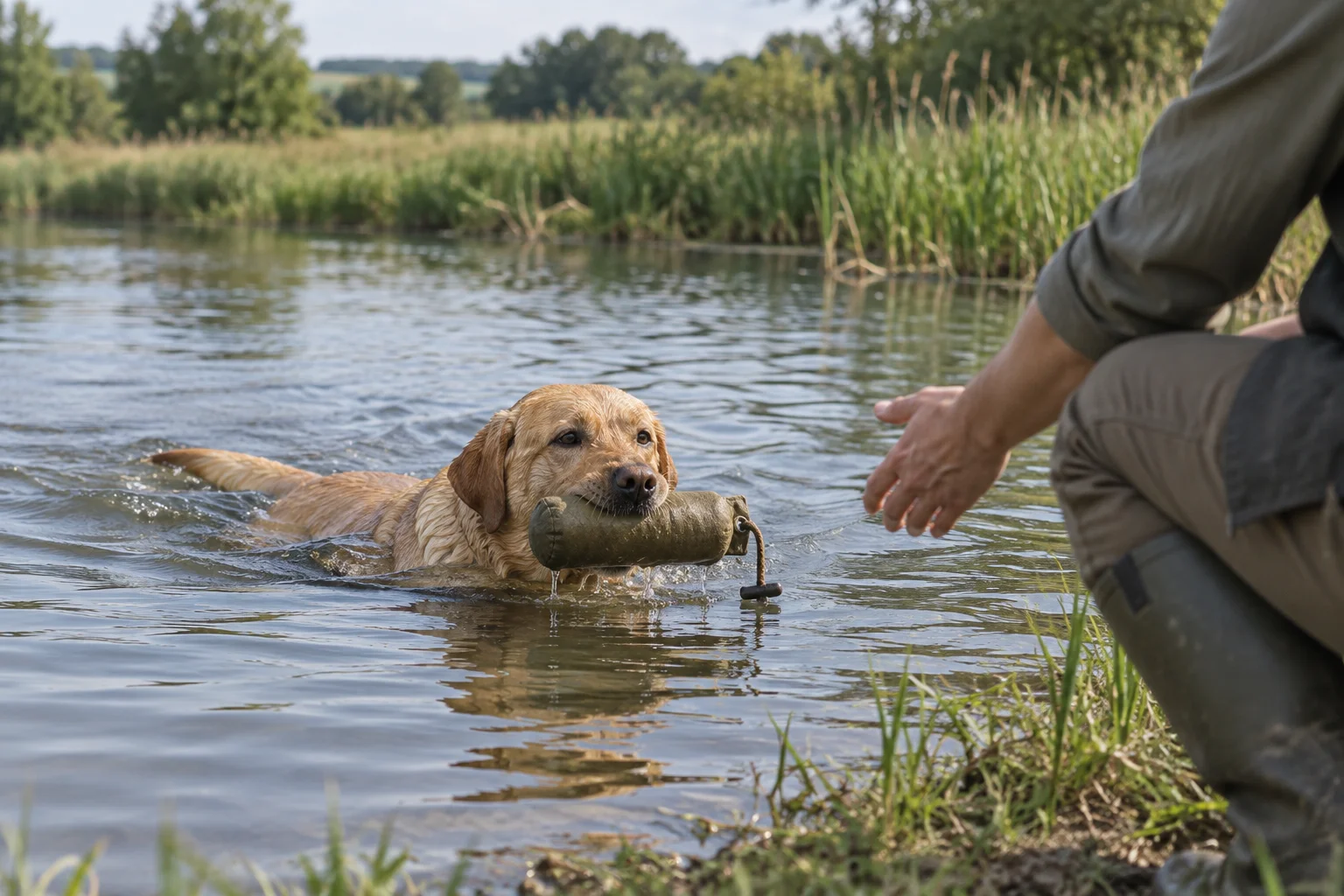
Throw a training dummy on land at increasing distances, then repeat across a short swim if water is available. A started dog should mark the fall, run out with purpose, pick up the dummy cleanly, and deliver it to hand rather than dropping it short or playing keep-away. Watch the mouth on delivery: a hard mouth that punctures or chews the dummy is a serious fault that carries over to real birds. Several retrieves back to back also show whether the dog's drive holds up once the excitement wears off.
How Do You Test a Started Gun Dog on Pointing or Flushing Birds?
For pointing breeds, plant a pigeon or quail in light cover and walk the dog in on a check cord to see whether it points and holds rather than crowding or bumping the bird. For flushing retrievers and spaniels, work a similar setup and look for a controlled flush within gun range instead of a wild chase, with focus and bird interest instead of chaos. If the dog ignores planted birds entirely or flushes wildly from thirty yards out, the bird work is not yet at the level the seller described.
How Do You Test a Started Gun Dog's Steadiness and Water Work?
Steadiness means the dog holds its position through the flush and the shot instead of breaking early, so simulate that sequence while the dog is on a stay or at heel. A started dog is not always fully steady, since wing-and-shot broke dogs cost more, so ask the seller directly what steadiness level they are claiming. For water work, send the dog on a marked retrieve across current or into cold water if conditions allow, and watch entry confidence. Hesitation at the bank is common in young dogs, but it should not look like outright refusal.
What Questions Should You Ask the Seller Before You Pay?
The next step is asking the right questions. Ask what "started" specifically means for this dog: hours logged, birds shot over it, and whether it has hunted a real season or just trained in a controlled setting. Ask about health testing on the parents, hips, elbows, eyes, and EIC for Labradors, plus any veterinary issues and whether a written health guarantee comes with the sale. Ask why the dog is being sold, since a started dog leaving a serious training program sometimes means it did not make the cut for a specific job, which is not disqualifying but worth knowing.
If the field test confirms the dog is solid and you are ready to move forward, Berry Creek Labs lists started and finished dogs alongside its Upcoming Litters as they become available.
How Much Should You Expect to Pay for a Started Gun Dog?
Started dog pricing varies widely by region, breeding, and how much training time is actually in the dog, so no single number applies everywhere. In general, a started gun dog costs more than an untrained puppy from the same litter and less than a fully finished, steady dog. Rather than anchoring to a number you saw online, ask the seller to itemize what the price covers: health testing, registration, vaccinations, and the specific skills demonstrated in your field test. A price that seems low for the claimed training level is a reason to test more carefully, not less.
What Is the Difference Between a Started Dog and a Finished Dog?
A started dog has the foundation: obedience, gunfire steadiness, retrieving, and early bird exposure, but it has not necessarily hunted a full season or handled the pressure of a real hunt with other dogs and shooting nearby. A finished dog is steady to wing and shot, handles at a distance on whistle and hand signals, and has proven itself across multiple hunts, often over more than one season.
The field test in this guide tells you where a specific dog actually sits on that spectrum, regardless of which label the seller used. Paying finished-dog money for a started dog's actual skill level is the most common and most avoidable mistake buyers make.
What Red Flags Mean You Should Walk Away from a Started Gun Dog?
Walk away if the seller will not allow an in-person evaluation, only offers video clips, or wants payment before the field test. Be cautious of vague answers about health testing on the parents, no written record of which stations the dog has actually passed, or a dog that only performs for one handler. A started gun dog that flinches hard at gunfire, refuses water entirely, or shows no bird interest after repeated exposure has gaps that training alone may not close quickly. None of these are automatically disqualifying alone, but two or more together are a reason to keep looking.
Frequently Asked Questions
Can you get a refund or trial period if a started gun dog fails testing?
Policies vary by seller, so ask before you pay, not after. Many reputable trainers offer a short trial period or a written health guarantee, though a field-skills refund is less standard once a dog changes hands. Get any refund, trial, or guarantee terms in writing before the sale closes; a seller who won't put terms in writing is a red flag.
How long does a field evaluation of a started gun dog usually take?
Plan on thirty to forty-five minutes to run all six stations properly, longer if water work happens at a separate location. Rushing the evaluation to fit a shorter visit is one of the easiest ways to miss a real gap in the dog's training.
Should you bring your own gun or ammunition to test a started gun dog?
Yes, or confirm in advance what the seller will provide. Testing with your own blanks or light loads at a known distance keeps the gunfire response consistent, rather than relying on whatever the seller happens to have on hand.
Is it normal for a started gun dog to be nervous around a stranger during testing?
Some mild caution around a new handler is normal, especially in the first few minutes. What matters is whether the dog warms up and responds to commands within the session; a dog that stays shut down the whole evaluation has not generalized its training beyond one handler.
Schedule Your Field Evaluation Before You Pay
If you are considering a started dog, every dog placed through Berry Creek Labs is evaluated to this same standard, and you are welcome to run the test yourself before any money changes hands. Contact Berry Creek Labs to schedule a field visit and see exactly where your prospective gun dog stands.