

A Labrador stud service pairs your female with a health-tested, pedigreed male to produce a litter that meets the same standards you would expect from a program like our Lab Puppies line, and getting it right means understanding the fee structure, the contract, and the timing before her heat cycle even starts.
By Berry Creek Labs, Champion Labrador Breeders
There is no single number that applies across the board for a Labrador stud service. The total is built from several line items, and understanding each one is what lets you compare quotes honestly instead of guessing at what a "fair" fee looks like.
What the Base Fee Covers
The base fee generally covers the use of the stud's genetics, his time and handling during the breeding window, and the paperwork the owner completes on his end (his own registration and health documentation). It typically covers one breeding opportunity or a defined breeding window around her fertile days, not an open-ended number of attempts.
What Moves the Fee Up or Down
A few factors consistently shift the total:
- Titles and accomplishments. A stud with confirmed championship bloodlines, or field and hunting test titles, commands a premium over an untitled dog.
- Health clearance level. OFA ratings for hips and elbows carry weight; an "excellent" rating reads differently to a breeder than a "fair" one, even when both technically clear.
- Proven versus unproven. A stud dog with a track record of successful litters usually costs more than a young, unproven male, since the buyer is paying for demonstrated fertility, not just potential.
- Breeding method. Natural, on-site mating is usually the simplest and least expensive path. Collected semen, whether chilled and shipped or frozen for long-term storage, adds collection, cooling or freezing, and overnight shipping charges on top of the base fee, often pushing the total up by a meaningful multiple over a straightforward on-site mating.
What's Bundled, What's Billed Separately, and the Usual Surprises
Many kennels bundle a live litter guarantee, meaning a free repeat breeding if the female does not conceive, into the base fee. Others treat that guarantee as a separate add-on, or don't offer one at all. Boarding for the female during her stay, progesterone testing to time ovulation, and semen shipping are frequently billed apart from the base fee, and owners who assume everything is included are often the ones caught off guard by the final invoice. Ask directly whether a guarantee means a full repeat breeding or only a partial credit toward a future litter.
Questions to Ask Before You Get a Quote
- Is there a guarantee if the female doesn't get pregnant, and what exactly does it cover?
- Is boarding included if she stays on-site during her cycle?
- Are the stud's health clearances current, meaning final OFA ratings rather than preliminary ones?
- Is this a natural mating or collected semen, and who covers collection and shipping?
- What deposit is required, and is any portion of it refundable?
The clearest way to land on an accurate number is to lay out your female's age, her current health clearances, and your preferred breeding method directly with the stud's owner, then ask for a written quote before anything is finalized.
What the Contract and Payment Terms Should Include
A written contract protects both sides of a Labrador stud service, and a verbal handshake is not enough when a litter, a fee, and two dogs' health histories are involved.
Contract Essentials
A solid contract identifies both dogs by their registered AKC names and numbers, attaches current health clearance documentation for the stud (hips, elbows, eyes, and relevant DNA panels), and spells out the breeding date or window and method used. It states the guarantee terms in plain language: repeat breeding, partial refund, or no guarantee at all, and it covers what happens if the stud becomes unavailable or injured before the mating can happen. If a pick-of-the-litter arrangement applies, the contract names which pick and by when it must be exercised. Both parties sign and date it before the breeding takes place.
When the Fee Is Typically Paid
Payment timing varies by kennel, but a common structure asks for a deposit to hold the date, with the remaining balance due at the time of breeding or once pregnancy is confirmed by ultrasound. Some breeders take the full fee upfront; others split it so the second half is tied to a confirmed pregnancy. Either way, the contract should state the exact trigger for each payment, not leave it to memory.
Paying With Pick of the Litter Instead of Cash
Some arrangements allow a puppy, usually described as "pick of the litter," to substitute for part or all of the cash fee. This is more common between established breeders trading bloodlines than with a stud currently in high demand, and it only works cleanly when the contract states which pick (first, second, and so on) and the deadline for making that selection once the puppies are evaluated.
Timing, Health Clearances, and What Happens During the Mating
Good timing and verified health testing are what separate a smooth Labrador stud service from a frustrating one.
Booking Ahead of Her Heat Cycle
Reach out well before her heat cycle begins, often weeks to months ahead, since reputable stud dogs and their owners book solid during peak season. Getting the contract, health documentation, and travel or boarding plans settled before her cycle starts means you are not scrambling once it does. Once she is in heat, progesterone testing through your veterinarian usually pinpoints her fertile window with far more precision than counting days on a calendar.
Health and Genetic Clearances a Stud Should Have
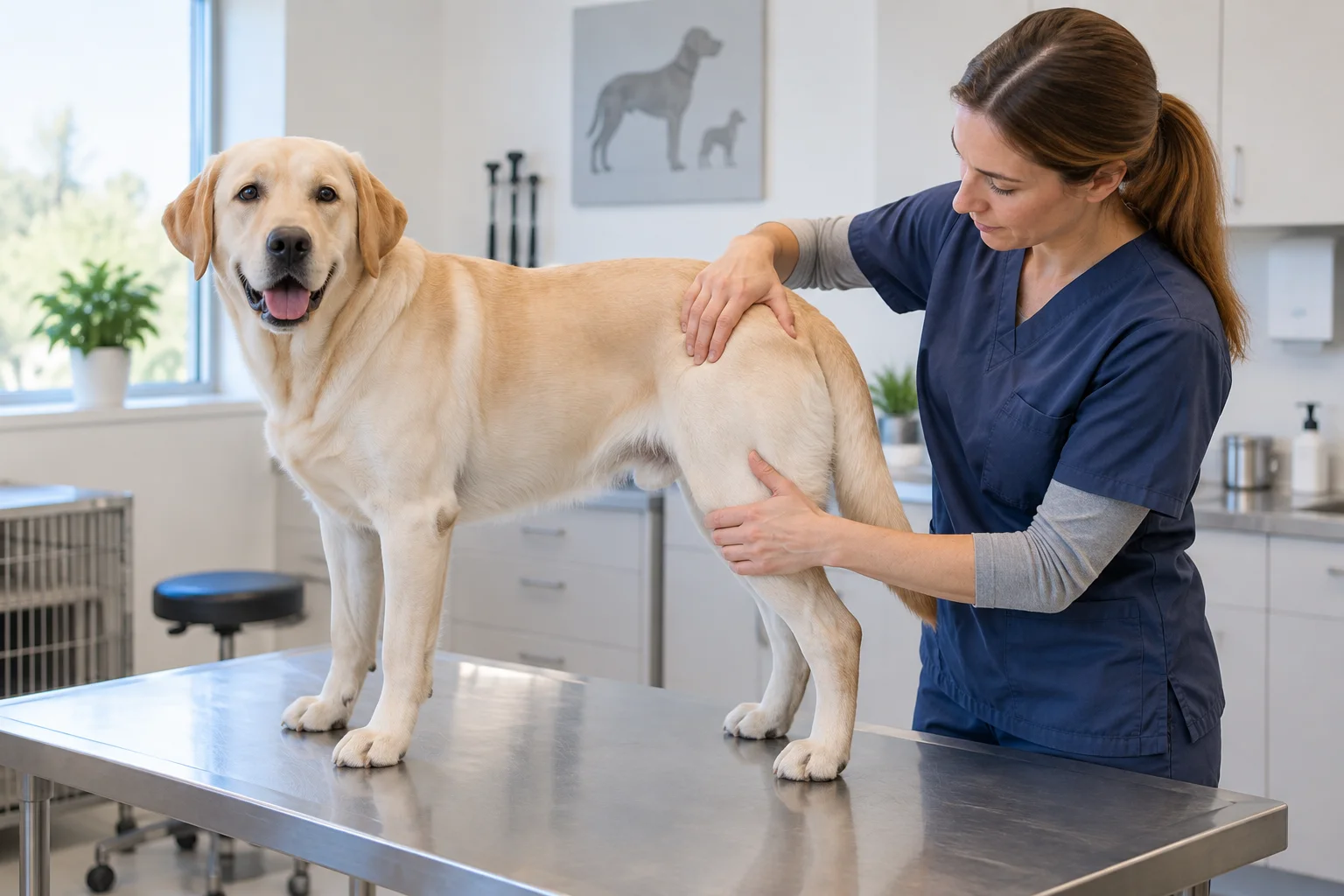
Reputable stud dogs carry current OFA clearances for hips and elbows, an eye clearance, and DNA panel results for conditions known in the Labrador Retriever breed, including exercise-induced collapse (EIC) and centronuclear myopathy (CNM). The Orthopedic Foundation for Animals (OFA) maintains the standard hip and elbow scoring system used across Labrador retrievers and most working breeds, and asking to see the stud's clearances directly, rather than taking a breeder's word for it, is a reasonable and expected step.
What Happens During the Mating
A natural mating typically involves a period of courtship before the dogs tie, a natural part of canine breeding where the dogs remain physically joined, commonly for a stretch of ten to thirty minutes, though duration varies by dog. A single successful mating is usually enough, though some breeders arrange a second mating a day or two later to improve the odds. From there, a successful pregnancy runs roughly 63 days to whelping, and the puppies' first eight weeks bring their own set of health, socialization, and feeding milestones before they go home.
Choosing the Right Stud and What Comes After Registration
The stud you choose shapes the litter for years, not just the paperwork for one season.
Evaluating a Potential Stud for Your Female
Look for a pedigree that complements your female's, meaning it does not double up on the same inheritable health concerns. Temperament match matters as much as looks, especially if you are breeding toward working ability or a family-companion disposition. Verify clearances yourself rather than relying on a listing, and weigh a proven stud's track record against a promising but unproven young male honestly, since both are legitimate choices depending on what you are optimizing for.
AKC Registration After the Mating
Both dogs need current AKC registration for the litter to register cleanly. After the mating, the breeder typically files a litter registration application with the AKC, using the signed stud service contract or a breeding certificate as supporting documentation, and individual puppy registration follows once the litter is whelped and recorded. Once that registration is confirmed, many breeders list the pairing among their Upcoming Litters so interested families can follow along.
Frequently Asked Questions
What happens if the female doesn't get pregnant?
Most written contracts specify what happens next, commonly a repeat breeding at no additional charge during a future cycle. If a pregnancy doesn't take, it is worth working with your veterinarian to rule out timing errors or an underlying health issue before scheduling the repeat mating.
Is a health guarantee always included with a Labrador stud service?
Not always. Some kennels bundle a live litter guarantee into the base fee, others offer it as a separate option, and some don't offer one at all. This should be spelled out clearly in the contract rather than assumed, so ask about it directly before you book.
Can a first-time female safely use a stud service?
Generally yes, once she has cleared a veterinary health check and reached an appropriate age and maturity level, commonly around two years old for Labrador retrievers so her own health clearances are final rather than preliminary. Her temperament and physical readiness matter as much as her age.
How soon after booking can the mating happen?
That depends on where she is in her cycle when you book and the stud's availability. Booking ahead of her heat cycle, rather than waiting until she is already in season, gives you the best chance of lining up both without a scheduling conflict.
Talk Through Your Female's Timeline With Us
Every Labrador stud service looks a little different once you factor in health clearances, timing, and contract terms specific to your female. Contact our kennel to walk through her health history and cycle timing so we can talk through what a match with one of our stud dogs would actually look like.