

The first week with a new puppy goes best when you set up a crate, keep a steady schedule and plan the first night home before pickup day. This plan walks through each day for families bringing home one of our Lab Puppies over the holidays, from the car ride to the first veterinarian visit.
By Berry Creek Labs, Champion Labrador Breeders
What do you need before bringing a puppy home for the holidays?
Gather the essentials before pickup day, since December stores are crowded. Here are the must haves, and the nice to haves can wait:
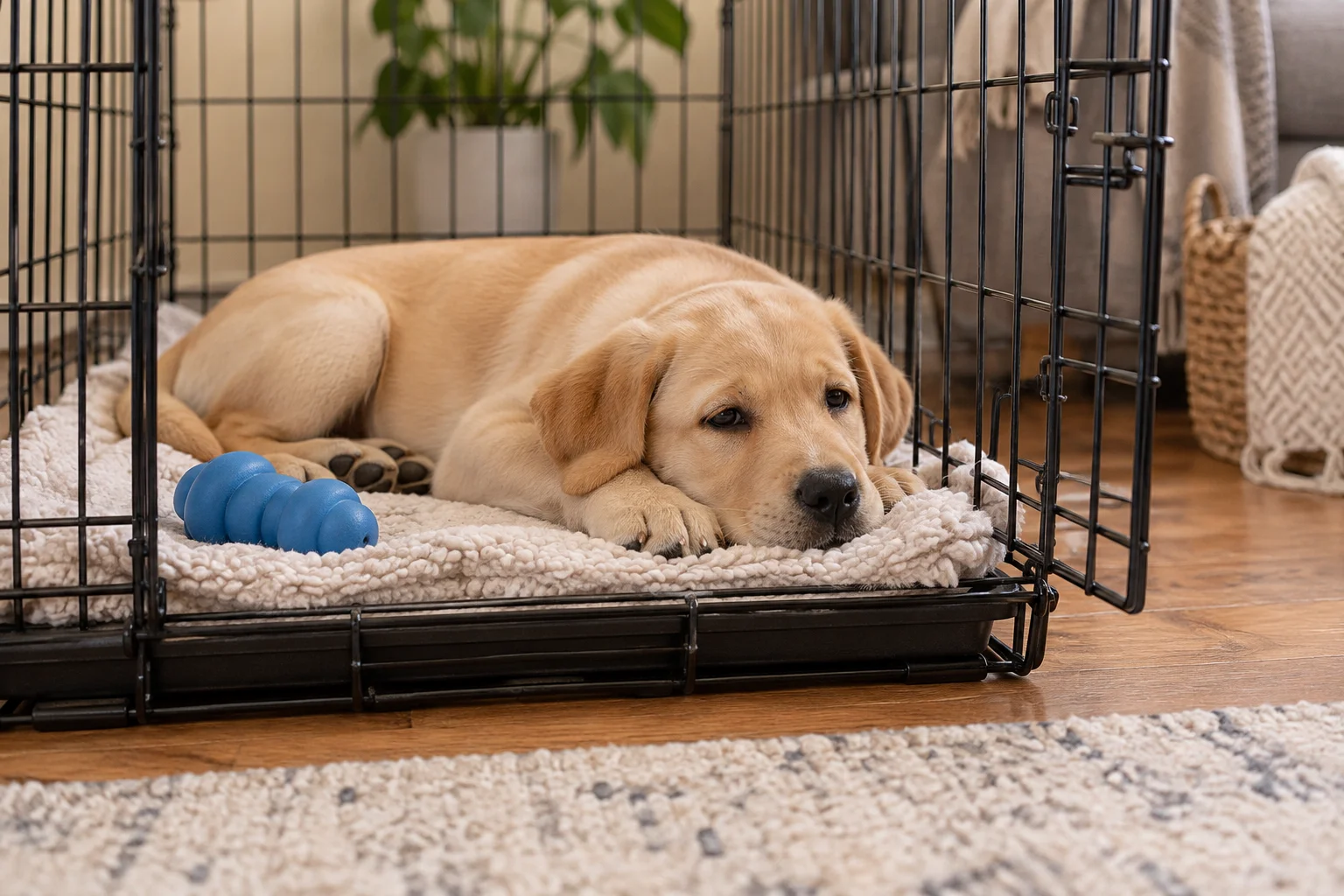
- A crate big enough for the puppy to stand, turn and lie down, with a washable blanket, since crate training starts on day one
- A baby gate or pen to keep play in one safe room
- Bowls, plus the same food your puppy already eats (ask what it is)
- Safe chews, soft toys and small treats
- A collar, ID tag, leash and enzyme cleaner for accidents
- A veterinarian appointment on the calendar
Pick a quiet corner away from the tree, the front door and the kitchen. If this is your first dog, settle questions about buying your first Labrador, such as health testing and what to ask before you buy, before pickup week.
What should the first week with a new puppy look like?
Aim for boring and predictable. The first week with a new puppy is mostly about routines, not lessons. A puppy that eats, sleeps and goes outside on a pattern settles sooner.
How should the first night home go with a Lab puppy?
Take your puppy outside to potty, then place it in the crate with a few chews and toys. Once it settles, keep the lights low. End the evening with gentle play rather than wild games so your puppy can wind down. Expect to be up once or twice. Anyone who remembers the first night home newborn routine knows the pattern: short stretches of sleep and many wake ups. Baby sleep and puppy sleep both come in pieces, and a young puppy cannot hold its bladder all night. Treat each potty trip like diaper changes: quick, calm and boring, with no play at 2 a.m. In Illinois in late fall the ground is cold, so keep a coat and flashlight by the door.
What is the right setup for a puppy first night home?
Put the crate in your bedroom or just outside the door for the first few nights. Your puppy has just left its mother and littermates, and hearing you nearby lowers stress. Where should a puppy sleep the first night? Pick one setup, ideally a crate beside your bed where you can hear each wake up and soothe by voice, and keep it all week. Skip your own bed, since it invites accidents and a habit that is hard to undo.
What should you do on the first night with puppy crying?
Check the basics first. If the cries start after a long sleep, carry your puppy outside, keep the trip short and quiet, then go straight back to the crate. If it only whimpers, wait a few minutes, since answering every cry can teach a puppy that crying opens the door. Rest a hand on the crate and speak softly. It can feel like a very long night, yet in many homes the nighttime crying fades over several nights as routines build. Call your veterinarian if the crying is frantic and constant, or if you see vomiting or diarrhea.
Still choosing a puppy for this season? The Upcoming Litters page is the place to start.
What are the best puppy tips for the first week?
Across the first week with a new puppy, a few habits do most of the work.
- Go out often. Take your puppy out after every sleep, meal and play session, and every 2 to 3 hours during the day. Give treats right after it goes, and clean accidents with enzyme cleaner instead of scolding. This is the start of potty training.
- Make the crate a good place. Crate training works best when meals happen in it and a treat drops in now and then.
- Add new experiences slowly. Offer one a day, like a different floor surface or the vacuum running in another room.
- Practice short separation. Leave the room for a minute, come back, and stretch the time a little each day.
- Protect naps. Pups sleep most of the day in quiet environments, and an overtired puppy gets nippy.
A step back on day four is common and does not mean you have failed, so celebrate small successes.
What does a new puppy first week schedule look like?
A steady day beats a perfect one, because schedules let a puppy predict what comes next. Adjust the pattern below to your puppy's age and your veterinarian's advice.
| Days | Main goal | What it looks like |
|---|---|---|
| 1 to 2 | Arrive and rest | Short play, many naps, frequent potty trips, few visitors |
| 3 to 4 | Build routines | Set wake time, meals and crate naps, plus a first brief time alone |
| 5 to 7 | Widen the world | New experiences in calm environments, like new sights and sounds, plus short practice with name and sit |
Young pups usually eat three or four meals a day, so follow the feeding plan from your veterinarian.
How do you keep a new Lab puppy safe around holiday guests and decorations?
Ask visitors to sit down and let the puppy come to them instead of passing it around. Introduce resident pets one at a time. When the house gets loud, move your puppy to a quiet room with chews and toys.
Tuck cords behind furniture, anchor the tree, and keep tinsel, ribbon and low glass ornaments out of reach, since pups swallow what they chew. The ASPCA Animal Poison Control Center lists chocolate, grapes, raisins and xylitol (a sweetener found in some candy and baked goods) as toxic to dogs, so cover plates and trash. Until your veterinarian says vaccinations are complete, skip dog parks and ask visiting pets to be healthy and vaccinated.
When should a new Lab puppy see the veterinarian?
Book the first visit before pickup day, with the appointment in the first few days or the first week in many cases. Bring any records that came with your puppy, and ask about vaccination schedules, parasite prevention, feeding amounts and when outings are safe.
FAQ
How much time should I spend with a puppy in the first week?
Plan to be home for most of the first few days, because a puppy needs frequent potty trips, meals and company. If you work away from home, line up a family member or sitter before pickup day.
Is the first week of having a puppy the hardest?
For many families the first few nights are the hardest, because sleep is broken and routines are not set yet. It usually eases as the puppy learns the schedule.
What do puppies do at 1 week old?
At 1 week old, pups are newborns that stay with their mother. Their eyes are still closed, and they spend most of the day sleeping and nursing. A puppy you bring home will be well past this stage.
Talk With Our Kennel About Your Holiday Puppy
Questions about pickup day or your puppy's first days at home? Reach the kennel through our Contact page and we will talk through your plan.