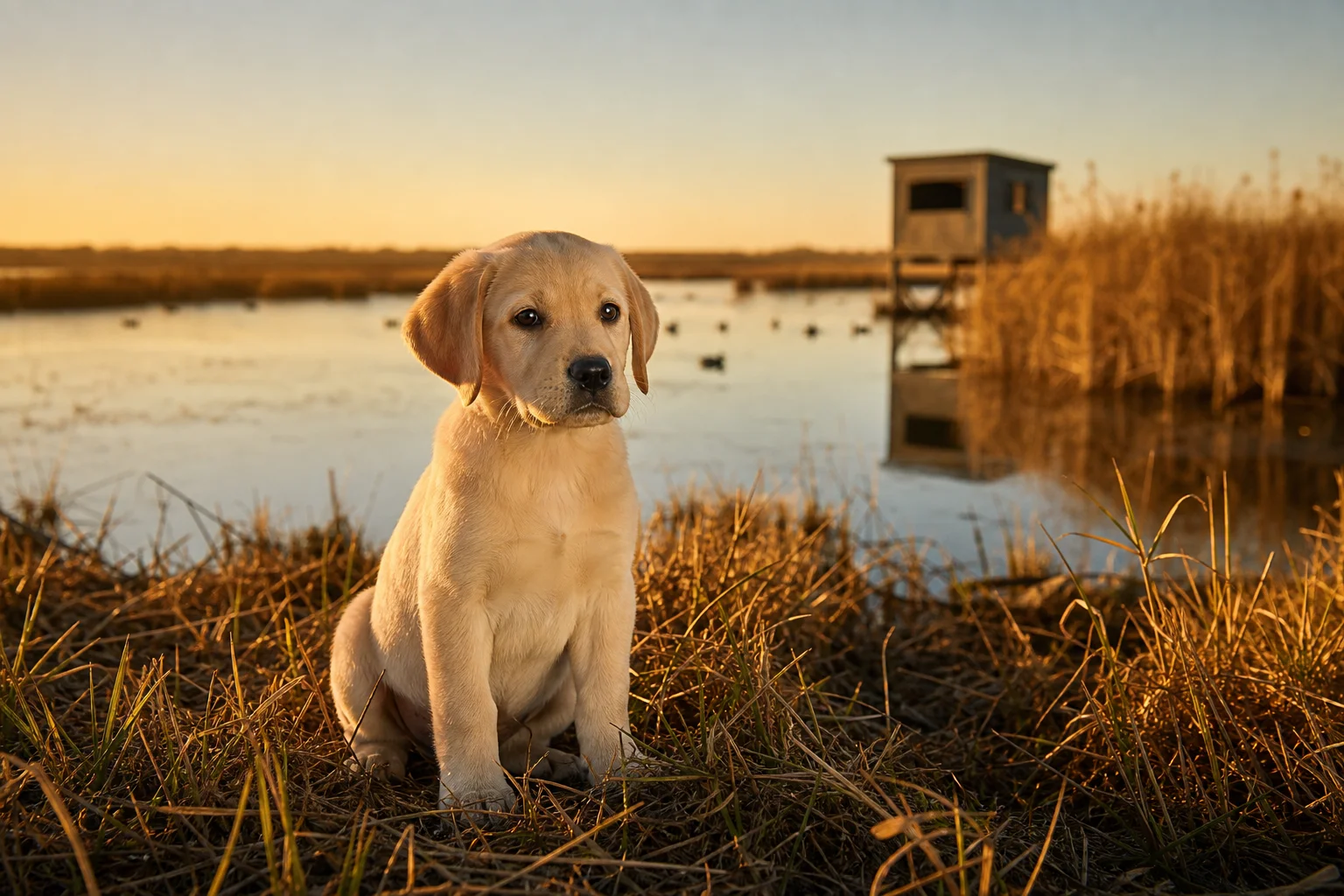
Knowing when to buy a duck dog for this season comes down to backward math from opening day: eight to ten months out is the sweet spot for a puppy, leaving room for growth, socialization, and real retriever work before you're both sitting in the blind. Berry Creek Labs times its Lab Puppies litters around that exact runway.
By Berry Creek Labs, Champion Labrador Breeders
When to Buy a Duck Dog for This Season Based on Your Local Opener
Most families ask when to buy a duck dog for this season only after they've already missed the ideal window, and by then the math gets tight. A Labrador puppy needs roughly eight months of growth and groundwork before it can reliably work a blind on opening morning, so if duck season opens in late September or October where you hunt, a puppy should already be on the ground, or close to it, by January or February.
That timeline starts with the breeder, not the buyer. Quality Labrador breeders plan litters around the calendar their puppy buyers actually need, which is why most litters timed for duck season whelp in late winter or early spring. A puppy born in February is eight weeks old by early April, which puts it right at the age serious training can begin, and gives a full six months of conditioning before opening day. The early weeks of a litter shape a lot of what comes later: temperament, food drive, and how a pup responds to handling all start showing up well before it ever leaves the whelping box.
The best age to buy a Lab puppy for hunting is between 8 and 10 weeks old. Waiting much longer than 12 weeks means missing the critical socialization window that shapes how a puppy handles gunfire, water, and new environments later on, and buying earlier than 8 weeks risks pulling a puppy before it has learned bite inhibition and basic structure from its littermates.
The Training Timeline From Puppy to Opening Day
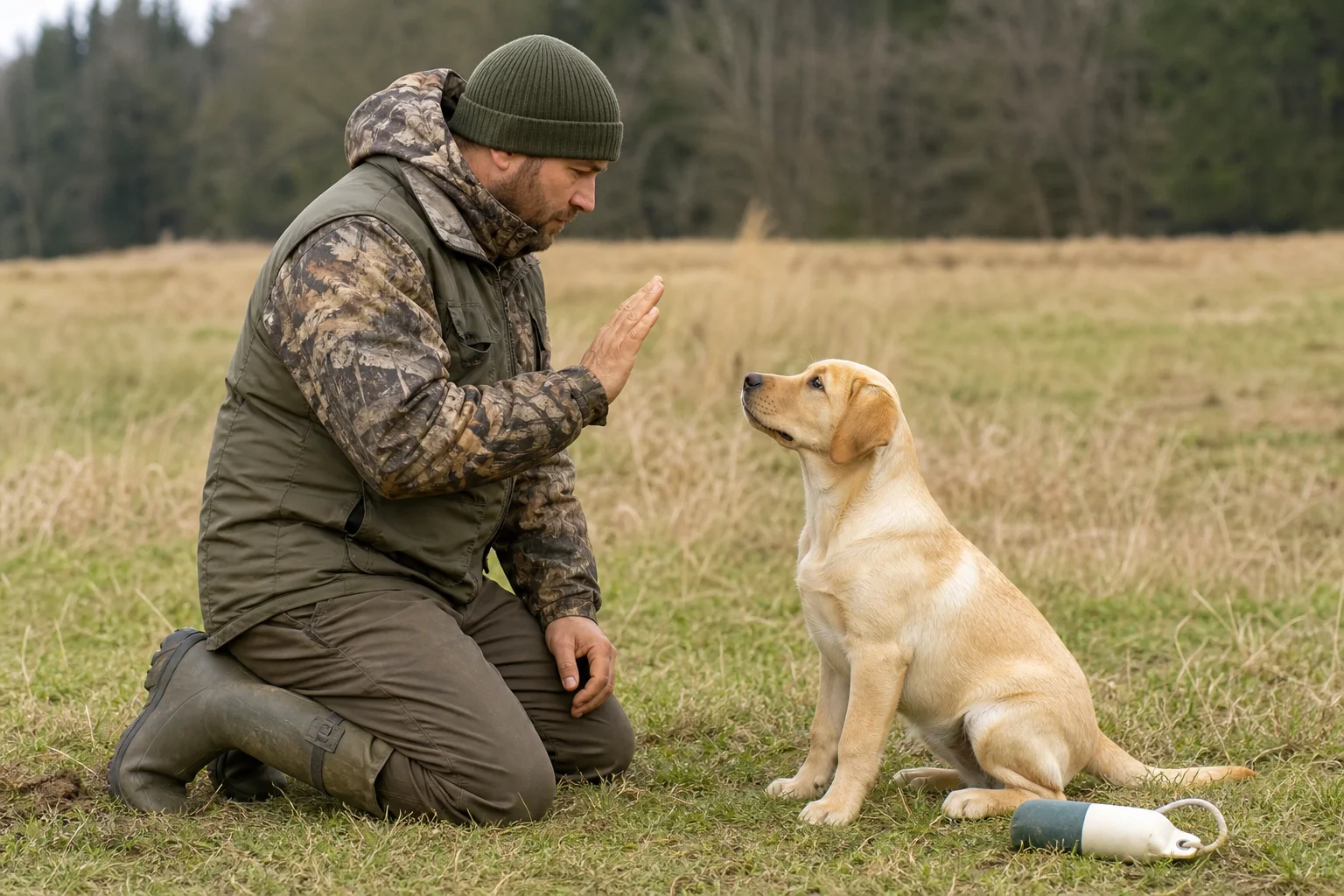
Retriever-specific dog training does not start the day you bring a puppy home, but it starts soon after. Basic obedience, name recognition, and low-pressure water introduction usually begin around 8 to 10 weeks, well before any duck hunting drills enter the picture. Formal retriever training, marking, steadiness, and controlled retrieves, typically starts closer to 5 or 6 months, once a puppy has the physical coordination and attention span to hold a command.
From there, plan on four to six months of consistent dog training to get a puppy from basic obedience to reliable field work. That means training should start no later than four to five months before duck season opens, and starting six to eight months out gives a real cushion for the inevitable setbacks, a gun-shy reaction that needs correcting, a retrieve that regresses, a distraction that has to be worked through. Training that starts too late gets rushed, and a rushed duck dog is an unreliable one on opening morning.
When Your Puppy Is Ready for Its First Hunt
A puppy's first real hunt should usually wait until 6 to 12 months old, and the honest answer depends more on training progress than on the calendar. A 6 month old puppy can hunt duck season in a limited role, sitting quietly in the blind, getting comfortable with gunfire and decoys, and picking up an easy retrieve or two, as long as the fundamentals are already solid.
What a 6 month old should not do is carry a full day in cold water or handle a marked double in heavy cover. That kind of work usually waits until closer to a year old, once joints have matured and steadiness has been proofed under real pressure. Treat the first season as an introduction, not a test. A puppy that has a positive, low-stress first exposure to duck hunting will mature into a far more confident dog than one pushed past its readiness.
Puppy or an Already Trained Adult: Which Fits Your Timeline
If the window before duck season has already closed, buying an already trained adult duck dog is often the better move than starting a puppy from scratch. A finished dog, one with a season or more of proven fieldwork behind it, can step into a blind this year instead of next, which matters if opening day is weeks away rather than months.
The tradeoff is cost and fit. A fully trained duck dog usually costs significantly more than a puppy, since the price reflects months of professional handling, proofing, and a track record in the field rather than just a pedigree, and the exact number varies widely by trainer, bloodline, and how much field time the dog carries. A puppy costs less up front but demands the eight-to-ten-month runway covered above. For hunters who want a dog matched to their own hunting style from day one, and who have the time to invest, a puppy raised and trained by the buyer usually builds a tighter partnership than a dog trained by someone else and handed over.
What Happens If You Buy a Duck Dog Too Close to the Season
Buying a puppy just weeks before duck season sets up a training timeline that cannot be compressed without real cost. A puppy still needs the same socialization, obedience, and water-work foundation regardless of the calendar, and rushing those stages tends to produce a hunting dog that is gun-shy, unsteady, or unreliable off the lead exactly when steadiness matters most.
The more common outcome is simpler: the puppy just isn't ready, and the first season becomes a wasted one spent building basics in the yard instead of working a blind. That is not a failure so much as a math problem. If the runway has already closed for this year, the better plan is usually to spend this season on foundational training and aim the puppy at next year's opener, or pursue a trained adult dog as covered above.
What Breed Is Best for Duck Hunting
The Labrador Retriever remains the gold standard gun dog for duck hunters, and for good reason. Bred specifically to retrieve waterfowl in cold water, a well-bred Labrador combines a dense, water-resistant coat, a soft mouth for undamaged retrieves, and a trainable temperament that takes to structured dog training more readily than most breeds.
British-bred Labradors in particular are prized among serious duck hunters for a calmer working temperament and a stockier build suited to cold-water work, alongside the health testing that responsible breeders run on hips, elbows, eyes, and heart before a dog ever enters a breeding program. Other breeds, Chesapeake Bay Retrievers and English Cocker Spaniels for upland and smaller-water work, have their place, but for an all-around duck dog that also fits well as a family hunting dog, the Labrador is hard to beat.
Frequently Asked Questions
How far ahead should I reserve a puppy for next season?
Most serious hunters reserve a puppy 8 to 12 months before the season they're targeting, since well-bred litters timed for duck season often have waiting lists. Reserving early also means matching with a litter whelped at the right time of year, rather than settling for whatever is available closer to opening day.
Do I need a purebred Labrador for duck hunting?
No, but a purebred from health-tested parents gives you more predictability in temperament, size, and working drive. Mixed-breed dogs can become capable duck dogs too, but a proven bloodline with a history of field work usually shortens the training timeline and lowers the odds of structural or temperament surprises later.
Can I train a duck dog myself, or do I need a professional?
Many owners successfully train their own duck dogs with consistency, patience, and a solid foundation of basic obedience before layering in retriever-specific work. A professional trainer can speed up the process or work through specific problems, but it is not a requirement for most hunters willing to put in the time.
What if I miss the ideal buying window this year?
Missing the eight-to-ten-month window does not mean missing the season entirely, and it does not change the underlying answer to when to buy a duck dog for this season, just the path to get there. Options include buying an already trained adult dog, treating this season as a foundation-building year for a young puppy, or borrowing a trained dog from a hunting partner while your own puppy grows into the role for next year.
Reserve Your Spot in Our Upcoming Litters
Timing is the single biggest factor in raising a reliable duck dog, and the best way to hit that timeline is starting with a litter planned around it. Check our Upcoming Litters to find a puppy whelped on the schedule your season actually needs.