
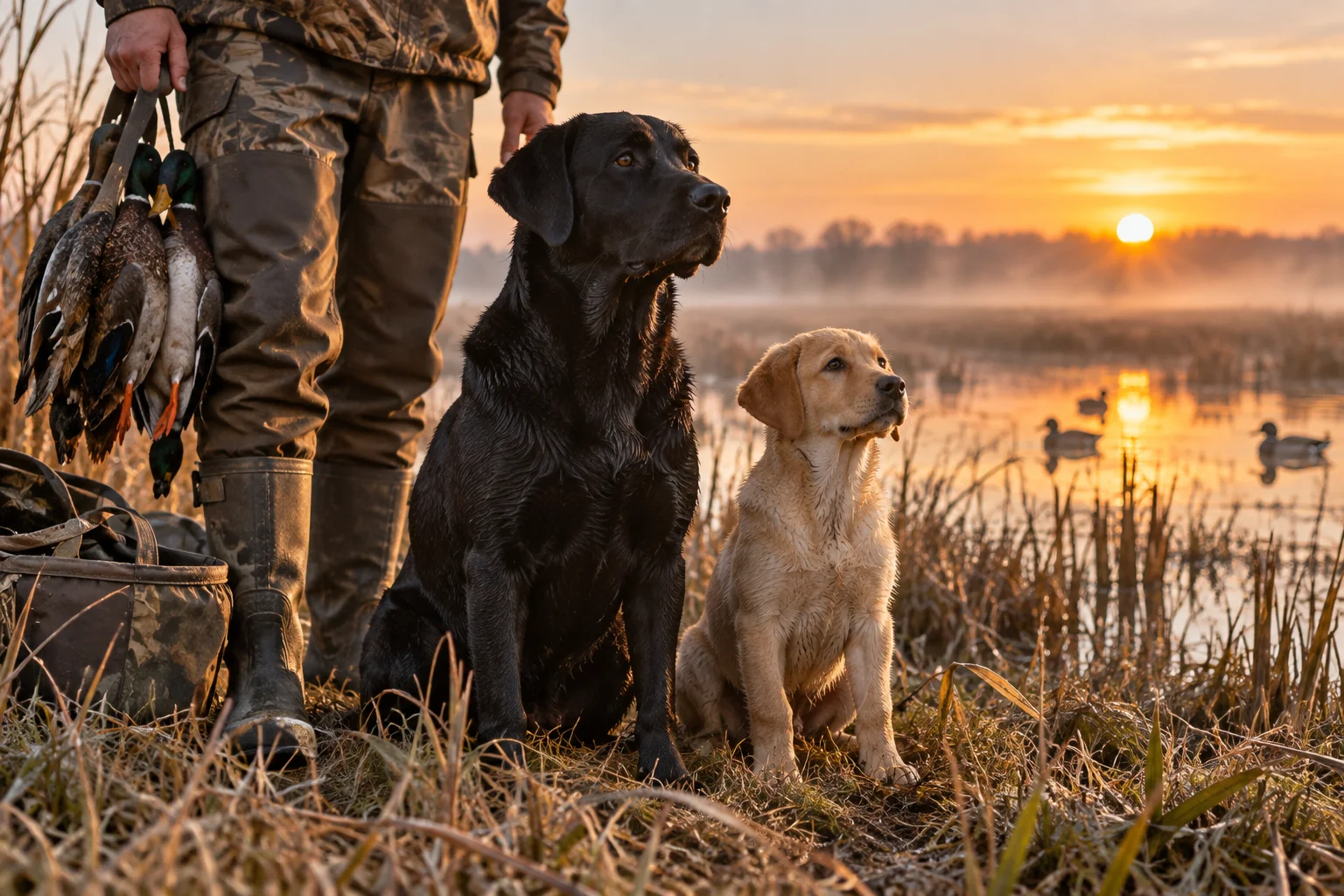
Ask three trainers what a gun dog costs and you will get three numbers, because the real question is whether you want a started, trained or finished dog. Each stage layers more time, skill and proven field performance onto the same well-bred Labrador, and that layered time, not the breed itself, sets the price you pay.
By Berry Creek Labs, Champion Labrador Breeders
What Does It Mean When a Gun Dog Is Called Started, Trained or Finished?
"Started," "trained" and "finished" are not registered titles, just working descriptions breeders and trainers use for how much of a hunting dog's education is already done. A started dog has raw obedience and early retrieving instinct locked in, but still needs seasoning. A trained dog has moved through structured dog training that adds formal handling, marking multiple falls, and staying steady to wing and shot. A finished dog has done all of that, then proven itself as a hunting dog working real cover in the duck blind or the upland field under an experienced handler.
Because started, trained or finished describes a spectrum rather than three hard cutoffs, two dogs labeled the same thing can still differ. What separates them is documented time on task, since a trainer's day rate does not change, only the number of days billed against your dog does.
What Can a Started Gun Dog Actually Do, and What Drives That Price?
A started dog usually sits, stays, comes and heels reliably, retrieves to hand on land and in water, and takes early exposure to gunfire and birds without bolting. It has not yet learned steadiness to wing and shot, formal handling with whistle and hand signals, or blind retrieves it cannot see fall. Because a started dog represents the fewest weeks of professional dog training, it sits at the low end of the range across all three stages, and the puppy's own cost, driven by pedigree, health testing (hips, elbows, eyes, EIC and CNM clearances) and litter demand, makes up a larger share of the total than training does here.
The line items are the puppy itself, several weeks of foundational obedience, and the kennel's day-boarding rate for that period. Buyers comfortable finishing the job themselves generally get the most value per dollar at this stage, since they are paying mostly for genetics and a head start rather than finished performance.
What Does a Fully Trained Gun Dog Know How to Do, and What Does That Level Cost?
A trained dog adds the pieces a started dog is still missing: steadiness to wing and shot, multiple marked retrieves, basic blind retrieves on hand signals, and calm behavior around other hunters and dogs. Getting there means several additional months of dog training on top of the started dog's foundation, plus live-bird sessions usually billed separately from basic obedience because they require a trainer, a gun and birds on hand.
That additional time roughly doubles the total training investment compared to a started dog, even though the puppy cost stays the same. What often surprises buyers is that live-bird exposure, travel to a training pond, and gear like an e-collar or a boat blind are frequently billed on top of the base fee. Ask a trainer directly whether birds, travel and equipment are included before comparing quotes, because two trainers at a similar rate can land on very different totals once those extras are added.
What Is a Finished Gun Dog, and Why Do Finished Dogs Cost the Most?
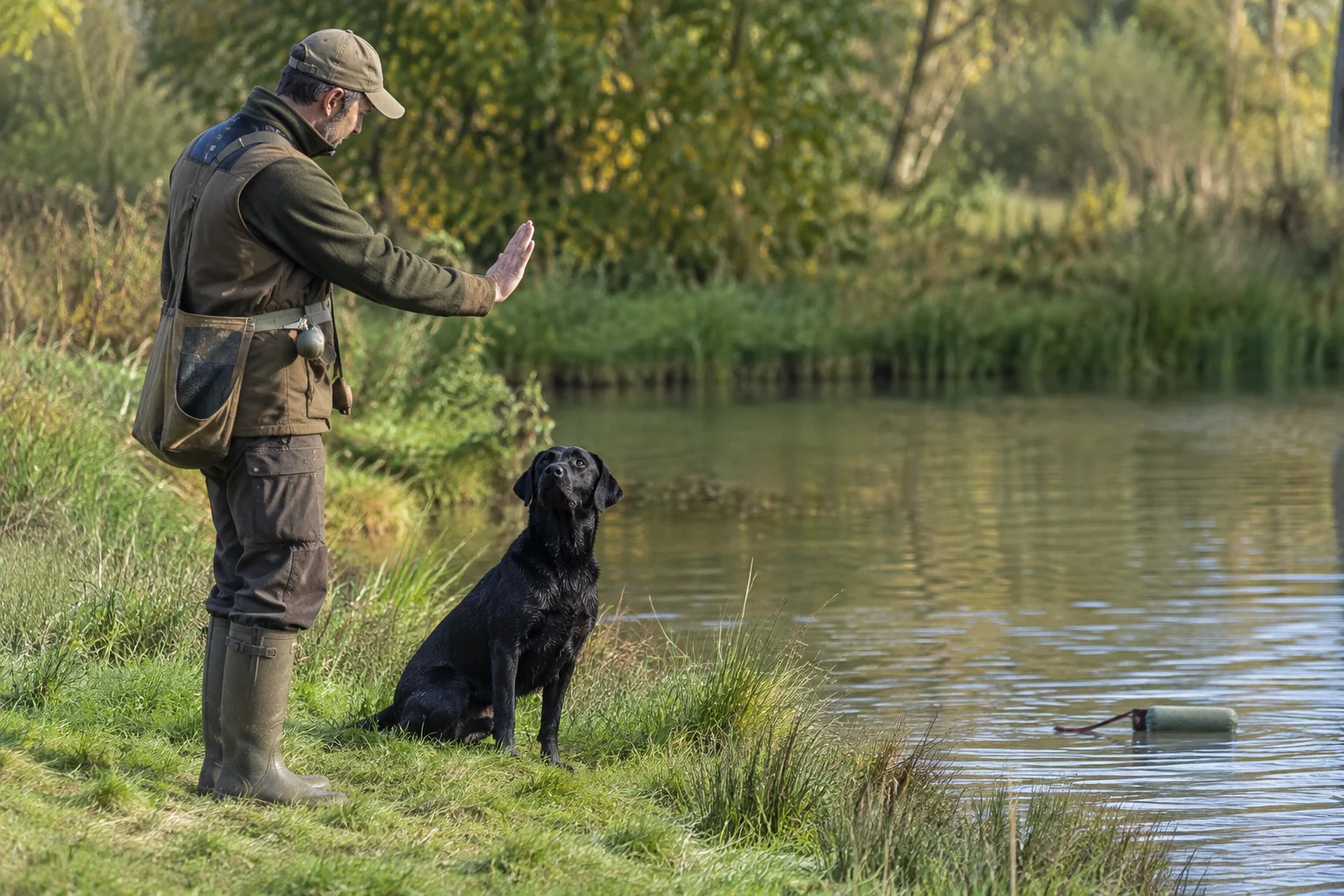
A finished dog has done everything a trained dog does, then proven it under hunting conditions: steady in a blind with shooting happening around it, running blind retrieves it never saw fall, handling to whistle and hand across real cover, and working calmly through a full day in the field the way a seasoned hunting dog should. Reaching that level typically takes several more months beyond a trained dog, plus a season or more of supervised hunts where the dog's performance is confirmed rather than assumed.
Because a finished dog stacks the puppy, months of dog training, live-bird work and confirmed field performance, its total cost commonly runs several times what a started dog costs, often three to four times as much. The premium is not padding: a trainer finishing a dog is putting their reputation behind proven performance, and that guarantee is what buyers are paying for. If a dog marketed as finished is priced barely above a trained one, ask how many supervised hunts it has logged, because that gap in documented field time is usually the reason why.
Should You Buy a Started, Trained or Finished Dog If You're a First-Time Hunter?
A first-time hunter is usually better served by a trained or finished dog than by a started one, because the started stage still expects the owner to supply steadiness, live-bird exposure and field manners a new handler has not built yet. A finished dog forgives handler mistakes; a started dog exposes them. That said, some first-time hunters would rather learn alongside their dog and treat a pre-trained retriever as a shortcut into the partnership rather than a finished product, and that is a reasonable call if you have the time and access to birds.
What matters most is matching the stage to your own schedule: if you cannot get to a training pond weekly, buy further along the started, trained or finished spectrum than your budget instinct suggests. If you are weighing that tradeoff for an upcoming litter, browse our current Lab Puppies to see which upcoming pups are suited to a started or trained program before they're gone.
How Long Does It Take to Go From a Started Dog to a Finished Gun Dog?
Most started dogs are somewhere around four to six months old with a few months of foundational work behind them. Moving that same dog from started to trained typically takes several more months of consistent dog training, and reaching finished status usually adds a full season of supervised hunting on top of that. Many dogs cross the whole span from started to finished somewhere between one and two years of age, depending on handler time and bird exposure available during the season.
Is It Cheaper to Buy a Started Dog and Finish the Training Yourself?
It can be, but only if you have the time, access to birds and the willingness to correct your own mistakes before they become habits. Skipping the professional trainer's remaining months is real savings on paper. What it does not skip is the risk: steadiness and blind-retrieve work that goes wrong at home often needs a professional to unwind it later, and correcting it usually costs more than building the skill right the first time.
The honest comparison is your own time and consistency versus a trainer's day rate. With regular sessions and reliable access to birds and open ground, finishing a started dog yourself can meaningfully lower the total cost. With an unpredictable schedule, paying for dog training through the trained or finished stage usually costs less than starting over after a bad habit sets in.
Frequently Asked Questions
What is the difference between a started dog and a finished dog?
A started dog knows basic obedience and will retrieve, but still needs steadiness, blind retrieves and real hunting dog exposure. A finished dog has all of that plus confirmed field performance from actual hunts under an experienced handler. The practical difference is documented time: months more professional dog training and a season of supervised hunting a started dog has not yet logged.
How much more does a finished gun dog cost than a started dog?
Finished dogs commonly cost several times what started dogs cost, often three to four times as much, because the price stacks the puppy, months of dog training, live-bird work and a season of supervised hunts. The exact multiple depends on how much training time and confirmed field work stands behind the individual dog.
Can a started dog be trained at home without a professional trainer?
Basic obedience and early retrieving can often be maintained at home, but steadiness, blind retrieves and live-bird work usually go faster and hold up better with a professional, since unguided mistakes tend to stick. Many owners split the difference: professional sessions for the harder skills, home practice for maintenance.
What age should a Labrador be when it's considered started, trained or finished?
There is no fixed age, only a range, since dogs mature and train at different rates. Many started dogs are labeled that way around four to seven months old, trained dogs closer to eight months to a year, and finished dogs typically after a full hunting season, often between one and two years old.
Do finished gun dogs still need training after you bring them home?
Yes. A finished dog needs ongoing dog training to stay sharp, especially in the off-season without regular bird work. Most handlers keep up short refresher sessions and at least one pre-season tune-up so steadiness and marking do not slip.
Talk to Us About Which Stage Fits Your Season
Whether you are weighing a started, trained or finished dog for this season or the next, we can walk through which stage actually fits your schedule and your hunting ground. Contact us and we will help you sort it out.