

Finding Lab Puppies in Illinois takes more than a quick search. The best labrador retriever puppies come from breeders who health-test both parents, hold champion British bloodlines, and raise litters inside a home environment. This guide covers the criteria that matter most before you place a deposit.
By Berry Creek Labs, Champion Labrador Breeders
What Sets Quality Lab Puppies in Illinois Apart
Illinois has no shortage of labrador retriever puppies for sale. A quick search pulls up dozens of listings, from backyard breeders with AKC-registered puppies and no health clearances to serious kennels with decades of lineage records and multiple titled dogs in their pedigrees.
That difference shapes everything: temperament, long-term health outcomes, trainability past puppyhood, and how well a dog fits into a family or hunting operation. Quality breeding programs focus on genetics first. Both the sire and dam carry OFA (Orthopedic Foundation for Animals) clearances for hip and elbow dysplasia, EIC (Exercise Induced Collapse) DNA testing, eye certifications from a board-certified veterinary ophthalmologist, and genetic panels for breed-specific recessive conditions.
When you compare lab puppies in Illinois listings, pay close attention to what breeders lead with. Health testing documentation, working or conformation titles on parent dogs, and transparent pedigree records say far more than color availability or fast turnaround times. A breeder who cannot answer detailed health questions is likely not the right choice, regardless of how appealing the photos look.
Serious breeders also track how their previous litters have aged. If a breeder can tell you that prior litters are healthy at age six or seven, that is meaningful evidence. If they have no contact with past buyers, that gap in follow-through reveals something about their priorities.
Health Testing: What to Require From Any Breeder
Health testing is the most concrete way to evaluate a labrador retriever breeding program before you visit. Here is what serious breeders will have on file for both parents.
OFA Hip and Elbow Clearances
Both sire and dam should carry OFA certifications rated Good, Excellent, or Fair for hips, plus clear elbow grades. A breeder who substitutes a single veterinary X-ray for a formal OFA panel review is skipping a meaningful checkpoint. You can verify any dog's OFA results yourself through the public OFA database before scheduling a visit. Krontveit et al. (2012) in Veterinary Journal documented that hip dysplasia prevalence in labrador retrievers correlates directly with breeding selection practices, making these clearances a true baseline requirement, not an optional extra.
EIC, prcd-PRA, CNM, and HNPK
Exercise Induced Collapse (EIC) causes young labs to collapse during intense activity. Progressive rod-cone degeneration PRA (prcd-PRA) causes progressive blindness. Centronuclear Myopathy (CNM) affects muscle function. Hereditary Nasal Parakeratosis (HNPK) causes painful nose lesions. All four are autosomal recessive, meaning a carrier parent paired with another carrier produces affected offspring at a 25 percent rate per litter.
DNA testing through accredited labs such as Paw Print Genetics or the University of Minnesota Veterinary Diagnostic Laboratory identifies carriers and clear dogs, letting breeders eliminate these conditions from future litters through careful pairings. If a breeder tells you their dogs are healthy without producing specific certificate numbers, push for the documentation before committing.
British Labrador Retrievers: Why Type Matters for Families and Hunters
The term "British Labrador" describes a conformation and temperament shaped by generations of UK show competition and working field trial selection. Understanding this distinction helps you evaluate litters more accurately no matter where you are searching in Illinois.
British-type labrador retrievers carry heavier bone structure, a broader skull and muzzle, a thicker otter tail, and a noticeably calmer baseline temperament compared to American field-bred lines. The AKC standard is the same for both types, but the British interpretation prioritizes a dog that performs reliably in the field and settles naturally inside a family home.
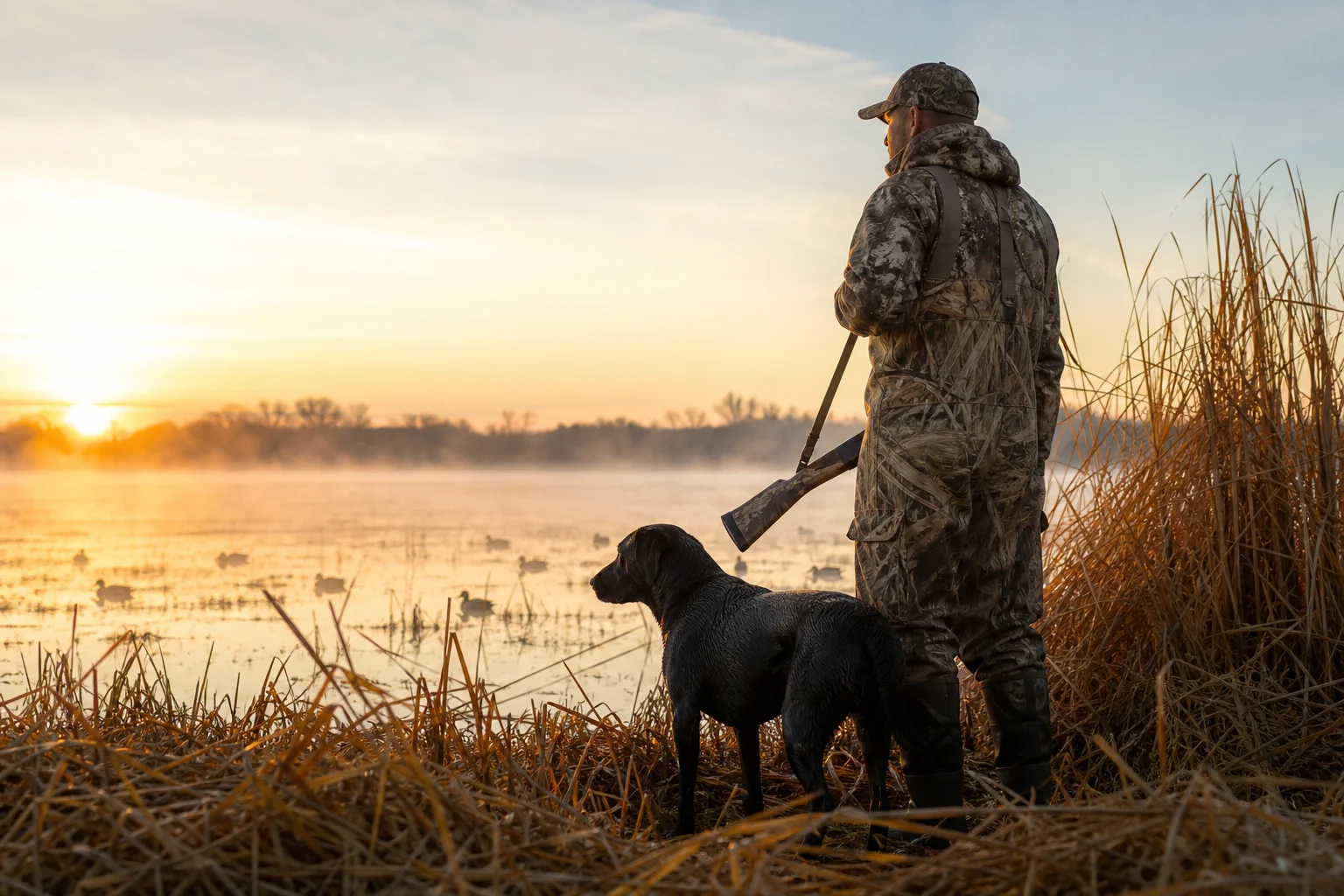
For families with children, that calmer temperament matters in daily life. A more biddable dog adapts to a household routine faster, responds more consistently to basic obedience, and is less reactive in busy environments. For hunters, the British-type lab's biddability translates into focused handling in the field and reliable marking across multiple seasons of use.
If you want a deeper breakdown of these breeding traditions and the exact questions worth asking a kennel before your visit, our English Labs in Illinois guide covers both in detail.
Yellow, Black, and Chocolate Lab Puppies: Color, Genetics, and What Each Means
Color is the first question most buyers ask, and it is also one of the most misunderstood factors in the labrador retriever puppies sale process. In labrador retrievers, coat color is controlled by two gene loci: the B locus, which governs black versus chocolate expression, and the E locus, which controls yellow expression. Color alone does not determine health, drive, or temperament. Breeding decisions made around color, however, can create indirect effects worth understanding before you search.
Black Lab Puppies
Black is the dominant coat color in labrador retrievers and statistically the most common across litters. Black labs from British champion lines carry the same build and temperament as their yellow and chocolate littermates. The gene responsible, BB or Bb at the B locus, masks other color expression at that locus. Two black parents can produce chocolate offspring if both carry the recessive b allele, so a litter's exact color mix is not always predictable from the parents' coats. Ask any breeder directly what colors their pairings have produced in past litters rather than assuming from appearance alone.
Yellow Lab Puppies
Yellow results from the ee genotype at the E locus, which prevents the expression of black or chocolate pigment regardless of what the B locus carries. Yellow labs from British show lines tend toward pale cream, a hallmark of UK conformation breeding. Those from American field lines often run fox-red. For most families and hunters, this difference is primarily aesthetic.
Chocolate Lab Puppies
Chocolate results from the bb genotype. A 2019 study by Calboli et al. in Canine Genetics and Epidemiology found that chocolate labs in the UK showed a shorter median lifespan compared to black and yellow lab populations. The researchers linked this to reduced genetic diversity within the chocolate breeding population caused by color-focused selection rather than the color gene itself. Choosing a breeder who health-tests and selects for conformation over coat color is the clearest path to a long-lived, healthy dog regardless of which color you prefer.
Visiting a Breeder: What to Observe Before You Commit
Once you have confirmed that a breeder holds proper health documentation, a visit tells you what no website can. Here is what to observe when you arrive.
Facility condition. Puppies raised in clean, stimulating environments develop stronger immune systems and better social responses. Overcrowding, strong ammonia odors, or puppies kept in isolation are warning signs regardless of how polished the listing appears.
Meeting the dam. You should always be able to meet the mother of the litter. She shows you the temperament your puppy inherited and gives you a direct look at the physical structure and energy level of the breeding stock. A breeder who declines this request without a clear medical reason is not operating transparently.
Puppy behavior. Watch how the puppies interact with each other and with visitors. Healthy, well-socialized labrador retriever puppies approach new people with curiosity and confidence. Puppies who hide or react to movement with fear have likely missed critical socialization windows that are difficult to recover after the litter separates.
Early stimulation protocols. Serious breeders begin neurological stimulation and structured environmental exposure in weeks two through five, introducing puppies to novel sounds, surfaces, and mild stressors before the litter leaves the kennel. Ask whether the program uses Bio Sensor stimulation, the Rule of 7, or another documented early development protocol.
Documentation to take home. Before leaving, ask for copies of all OFA certificates, DNA test results, and vaccination records for the litter. A reputable breeder will have these ready without hesitation. Ask about the health guarantee as well: what conditions it covers, for how long, and what the process looks like if a genetic condition surfaces after placement.
Good Training outcomes depend heavily on what a breeder does in weeks three through seven. If you plan to work your lab for hunting retrieves or formal obedience, that early foundation shapes how quickly your puppy responds to instruction once formal work begins.
Frequently Asked Questions
Are British-type labrador retriever puppies suitable for hunting?
Yes. British-type labrador retrievers were developed through UK working retriever trials and conformation competition, so hunting drive is deeply embedded in their genetics. Many handlers prefer the calmer baseline because the dog takes direction more readily and maintains focus across long hunt days. Selecting a strong field prospect comes down to watching drive, retrieve instinct, and biddability in the litter itself, not just the pedigree on paper. Our Hunting Labrador Retrievers guide walks through what to look for in more detail.
What health tests should be completed before labrador retriever puppies go to new homes?
At minimum: OFA hip and elbow clearances on both parents, EIC DNA testing, prcd-PRA DNA testing, and a current CAER eye examination. A thorough panel also covers CNM and HNPK. Labrador retriever puppies for sale without this documentation carry unknown health risks that often surface as substantial veterinary costs in years two through six.
How do I find reputable lab puppies in Illinois?
Start with the AKC Marketplace and the Labrador Retriever Club of America breeder referral program, both of which require a signed code of ethics and current health clearances. Verify OFA results directly through the public OFA database before your visit. Referrals from local veterinarians and regional hunt clubs are also consistently reliable sources.
When are labrador retriever puppies ready to go to their new homes?
Eight to ten weeks is the standard placement window. Puppies separated before seven weeks miss behavioral development that only happens inside the litter group, particularly bite inhibition and canine social signaling. Early placement before seven weeks is a consistent warning sign from any breeder, regardless of their explanation.
What separates a quality kennel from a casual breeder?
A serious kennel maintains complete health clearances, titled parent dogs, written health guarantees, microchipping, and ongoing post-placement support. A casual breeder typically produces litters without health documentation and may not know the sire's full background. Long-term health outcomes and temperament stability are what set serious breeding programs apart, not the price at placement.
Find Your Illinois Lab Puppy at Berry Creek Labs
Berry Creek Labs raises champion British-type labrador retrievers with full health panels, documented bloodlines, and a placement process focused on long-term outcomes for dogs and families alike. If you are ready to take the next step, Contact us to ask about current litters and what to expect from our puppy placement process.