Why Hunting Labrador Retrievers Belong in the Field
For serious waterfowl hunters and upland bird enthusiasts, finding the right hunting labrador retrievers for sale is one of the most important decisions you will make. A finished gun dog is not just a companion, it is a working partner whose genetics, early development, and training foundation will shape every season you share together. Not all Labradors are built for the demands of real field work, which is why selecting from proven field lines matters so much.
The Labrador Retriever has been North America's most popular breed for decades, but popularity comes with a cost. Heavy demand from the pet market led many breeders to prioritize temperament and conformation over working ability. The result is two distinct populations within the same breed: show or bench-bred Labs built for the ring, and field-bred Labs bred to mark, drive, and retrieve under real hunting conditions. If you are shopping for a gun dog, those two populations are not interchangeable.
What Makes Field Bred Labrador Puppies Different
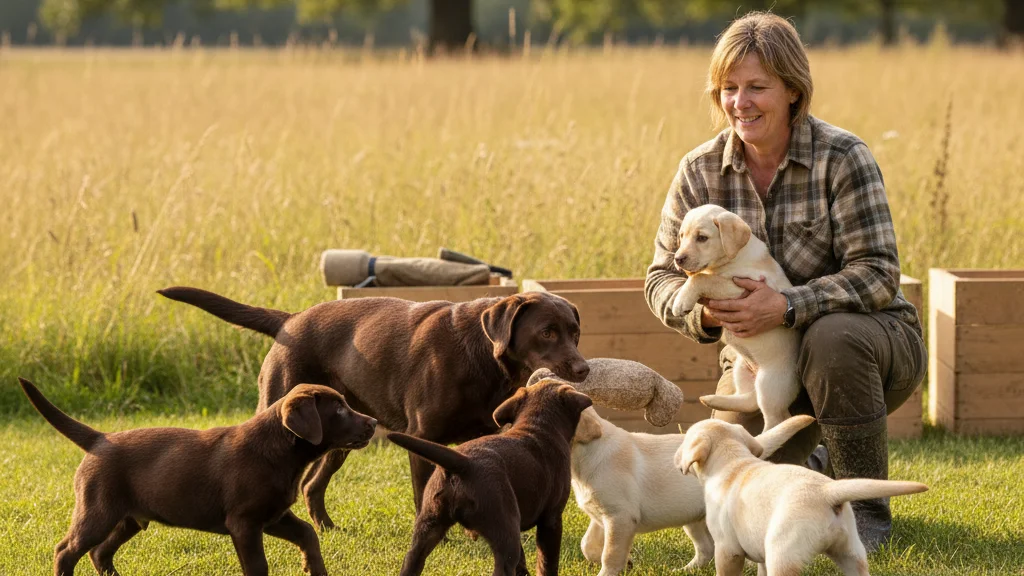
Field bred labrador puppies look and move differently from their bench-bred counterparts. They are typically leaner with a more athletic build, a narrower head, and a higher drive for retrieving. These physical traits are not cosmetic preferences, they are the outward expression of generations of selection pressure on working ability.
Breeders who focus on field lines evaluate their dogs on performance benchmarks, not just appearance. A sire or dam with hunt test titles, field trial placements, or a documented record of seasons spent in the blind has demonstrated the traits that translate into a capable gun dog. Those traits, including prey drive, biddability, nose, marking ability, and water affinity, are highly heritable. When both parents carry strong field credentials, the probability of producing pups with those same qualities increases substantially.
Focus on these markers when evaluating a litter:
- Hunt test titles such as Junior Hunter (JH), Senior Hunter (SH), or Master Hunter (MH) indicate that a dog has been trained and tested against a defined standard.
- Field trial placements reflect competition against other trained dogs at a high level.
- Working pedigrees that trace back several generations to titled dogs signal a breeder who has maintained consistent selection criteria over time.
- Health clearances, including OFA hip and elbow certifications and eye clearances, confirm that soundness was not sacrificed for performance.
Reading a Pedigree: What to Look For
A pedigree is a dog's working resume going back multiple generations. Learning to read one is a foundational skill for any buyer serious about getting a field-capable pup.
Look for titled dogs listed in bold within the first three generations on both the sire and dam side. A pedigree stacked with Master Hunters on one side and nothing on the other is worth scrutinizing, since working ability expressed on only one side of the cross may or may not carry forward consistently. The strongest field pedigrees show titled dogs on both sides and ideally in the middle of the pedigree where both lines converge.
Be cautious of pedigrees where titles appear only in older generations. A breeder who has not kept their current breeding stock titled and tested may be coasting on a reputation established by dogs that no longer contribute to the gene pool.
Choosing Hunting Lab Breeders You Can Trust
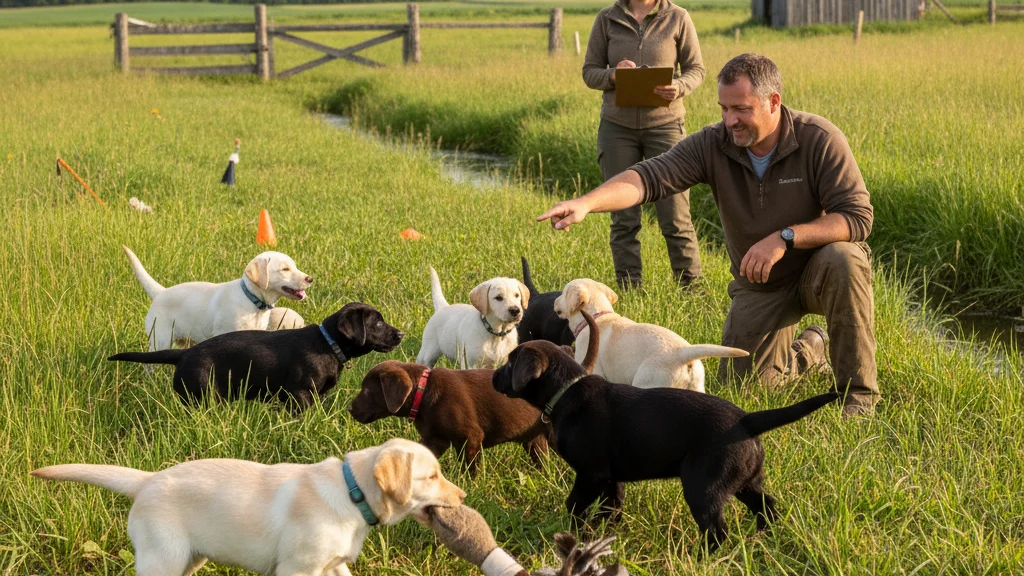
Finding trustworthy hunting lab breeders takes research, but the effort pays off over the life of the dog. Reputable field breeders are typically involved in the retriever community, either through hunt test clubs, field trial organizations, or hunting dog associations. That community involvement means they are accountable to peers who understand the work.
When evaluating a breeder, ask these questions directly:
Can I see the dam in person? A breeder who keeps their breeding dogs on-site and works them regularly can show you what you are buying. A dam who has been hunted or titled is the best possible proof of the line.
What health testing has been done? Responsible breeders clear hips, elbows, and eyes before breeding. Ask for OFA registration numbers and verify them independently at ofa.org. Exercise-induced collapse (EIC) and progressive retinal atrophy (PRA) DNA testing are also common in serious field programs.
What is your selection process for buyers? Breeders who ask thorough questions about your hunting situation, training experience, and lifestyle are invested in good outcomes for their pups. Breeders who will sell to anyone with a deposit should raise a flag.
Do you provide ongoing support? Field dog breeders with strong programs often stay involved after placement. They can answer training questions, recommend resources, and help troubleshoot problems that come up during development.
Temperament and Trainability in Field-Bred Labs
Drive and biddability are the two traits that define a field-bred Lab's working temperament. Drive describes the dog's motivation to retrieve, mark birds, and stay engaged through a long day in the field. Biddability describes how easily a dog accepts direction and training from a handler.
The best field Labs combine both. A high-drive dog with low biddability can become a liability in the field, breaking before the shot, running blind without direction, or ignoring the handler when excitement peaks. A highly biddable dog with low drive may be easy to train but will lack the intensity required to find and retrieve birds in difficult conditions.
When evaluating puppies in a litter, watch for pups that show retrieving interest early and respond to the handler between retrieving bouts. A puppy that runs out enthusiastically and returns to the breeder voluntarily is displaying both traits. Avoid pups that are either indifferent to the retrieve or so frantic they cannot settle.
Starting a Puppy from Field Lines the Right Way
Puppies from quality field lines arrive with potential, not finished skills. What you do in the first year will either develop or suppress that potential. A few foundational principles apply regardless of whether you plan to train the dog yourself or work with a professional.
Socialization during the first sixteen weeks is critical. Exposing a puppy to birds, water, gunfire at appropriate distances, and varied terrain lays the sensory groundwork for field work later. These experiences should be positive and brief, not overwhelming.
Obedience and control exercises should begin early and stay consistent. Sit, here, and heel form the communication framework that makes advanced field training possible. A pup that understands and respects basic commands is far easier to bring along on advanced concepts like steadiness, blind retrieves, and hand signals.
Avoid the temptation to over-hunt a young dog. A puppy's joints, confidence, and focus are still developing through the first season. Controlled exposure beats heavy use for building a dog that will hold up physically and mentally over a long hunting career.
Finding Your Next Gun Dog at Berry Creek Labs
Selecting a hunting Labrador is a long-term investment in your time afield. The breed's reputation for marking, drive, and loyalty in the water and uplands is earned, but only when the genetics behind a dog have been selected with working purpose in mind.
Berry Creek Labs breeds Labradors with the field hunter in mind. If you are looking for a pup from proven field lines with the health clearances, working pedigree, and breeder support that serious hunters deserve, reach out to learn about upcoming litters at berrycreeklabs.com. The right start begins before the puppy ever comes home.